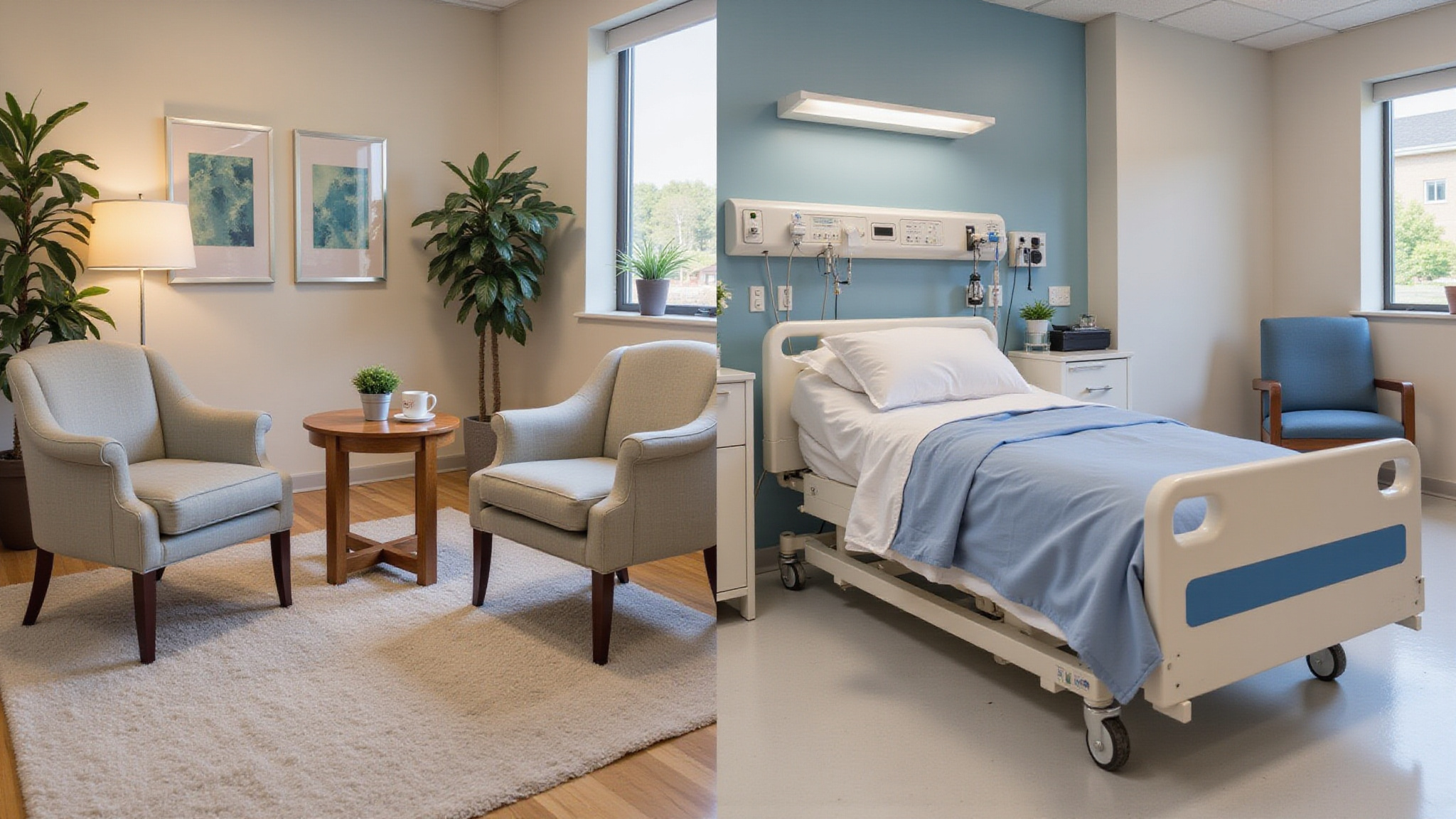
Inpatient mental health treatment keeps you overnight in a hospital or treatment program, where you’ll get 24-hour support, medical monitoring, and crisis stabilization. Outpatient care lets you attend scheduled appointments in person or by telehealth, then return home the same day. Its intensity varies, from standard visits to intensive outpatient and partial hospitalization programs. Your clinical need and safety risk guide which level fits. Below, you’ll see when inpatient care becomes necessary and how stepping down works.
Key Takeaways
- Inpatient mental health treatment involves an overnight stay in a hospital or treatment program, while outpatient care lets patients return home the same day.
- Inpatient care provides 24-hour support, medical monitoring, and crisis stabilization; outpatient care uses scheduled in-person or telehealth appointments.
- Outpatient intensity varies, ranging from standard visits to intensive outpatient and partial hospitalization programs offering several hours of daily treatment.
- Inpatient care becomes necessary when acute symptoms or safety risks exceed what scheduled outpatient appointments can safely manage.
- Inpatient treatment is generally the most expensive level of care, with insurance coverage and prior authorization requirements varying by plan.
inpatient vs outpatient mental health
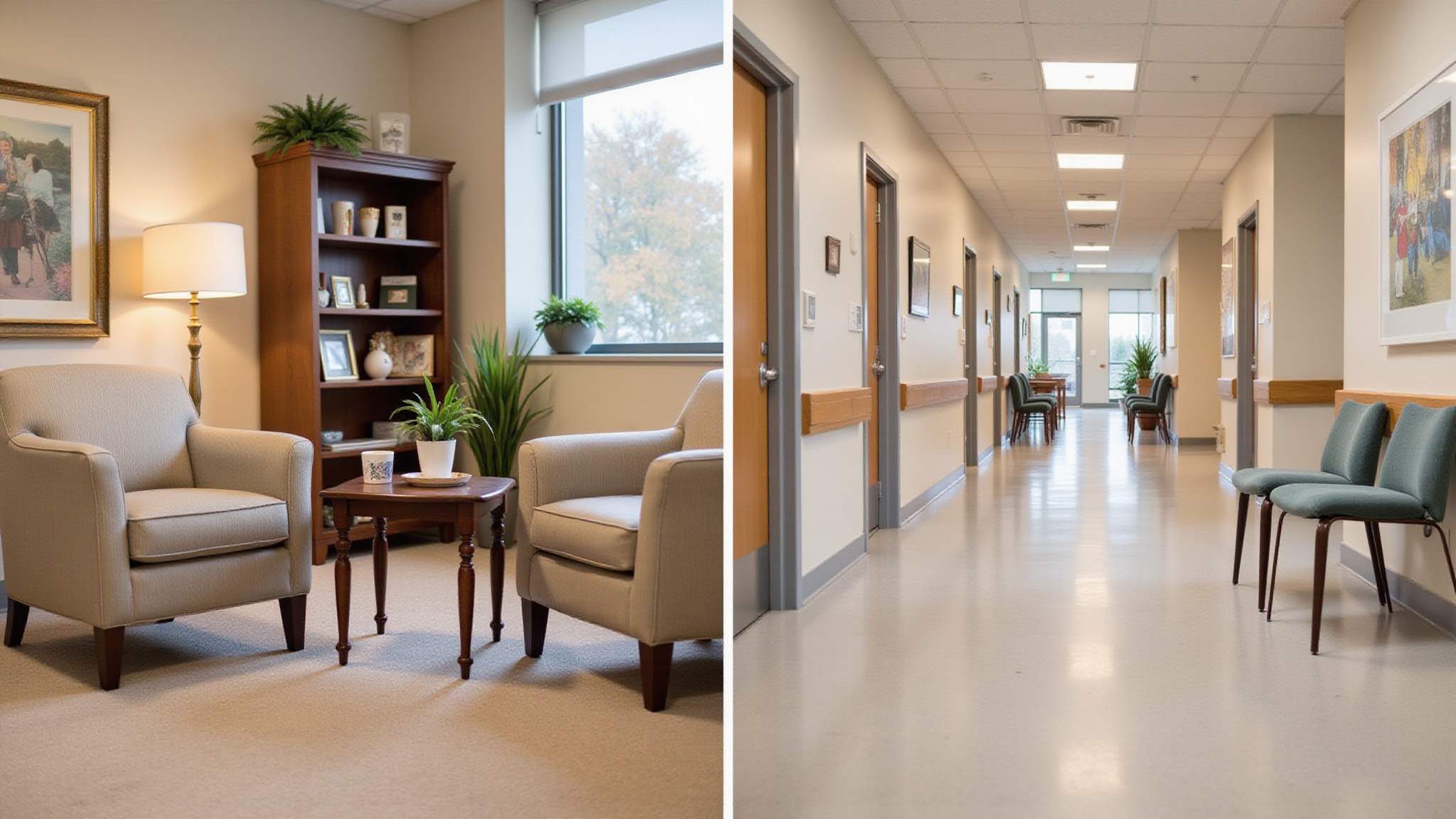
The core difference between inpatient and outpatient mental health treatment is whether you stay overnight. Both levels of care treat mental health and substance-use conditions. Inpatient care keeps you in a hospital or treatment program for days or weeks, providing 24-hour support, medical monitoring, and crisis stabilization when your symptoms or risk can’t be safely managed elsewhere. Outpatient care lets you attend scheduled appointments in person or by telehealth and return home the same day. Its intensity varies: standard visits suit you if you can maintain regular sessions, while intensive outpatient and partial hospitalization programs deliver several hours of group therapy, individual sessions, and coping-skills training. Residential programs differ from inpatient care, offering supervised overnight stays, often outside hospitals, that don’t involve hospital-based medical management.
How the two compare on setting, supervision, and length of stay
Inpatient and outpatient care differ in setting, supervision, and length of stay. Inpatient treatment places you in a hospital or treatment program around the clock, while outpatient care brings you to appointments in person or by telehealth and sends you home the same day.
Supervision follows setting. Inpatient care gives you 24-hour support and, in hospitals, medical monitoring. Outpatient intensity scales with your needs: intensive outpatient and partial hospitalization run sessions of at least a few hours.
| Inpatient length-of-stay measure | Reported figure |
|---|---|
| General-hospital psychiatric mean stay | 6.89 days |
| Swiss hospital median, short vs. long stay | 4 vs. 32 days |
| England and Wales intensive care guidance | Generally ≤8 weeks |
These figures reflect specific settings only, not universal benchmarks. Your stay should match clinical need and risk.
When inpatient care becomes necessary

Inpatient care becomes necessary when your symptoms or safety needs exceed what scheduled appointments can manage.
Clinicians typically recommend admission in these situations:
- You need 24-hour care. Your mental health or substance-use needs require continuous support that outpatient visits can’t provide.
- You’re facing an emergency. Hospital treatment addresses crises that demand intensive medical supervision.
- Your risk is heightened. Acute, severe symptoms that can’t be safely managed in less secure settings may warrant psychiatric intensive care.
- You require medical monitoring. Hospital-based care can include medication management and close observation.
Your stay’s length depends on clinical need, lasting days or weeks. Your team should schedule outpatient follow-up within 7 to 30 days and share your medication plan with providers prior to your discharge.
What the step down to outpatient involves
The step down from inpatient care often involves moving into partial hospitalization or an intensive outpatient program, and it rarely means going straight to a weekly appointment. Care intensity forms a continuum. These levels involve sessions lasting at least a few hours and may combine individual appointments, group sessions, and coping-skills support, without an overnight stay.
Your transition should start before you leave. Effective discharge planning schedules your outpatient follow-up in advance and shares your treatment and medication plans with your next provider. Quality guidance in one review describes a 7-to-30-day follow-up window, and timely contact is central to continuity. Care coordination links your hospital team, outpatient clinicians, and community services. As you stabilize, you can shift to routine outpatient visits, in person or by telehealth.
How voluntary and involuntary admission differ

Voluntary and involuntary admissions differ in who makes the decision and on what legal basis, even though both pathways can lead to the same hospital unit.
- Decision-maker: With voluntary admission, you consent to treatment yourself. Involuntary admission relies on clinicians or courts acting under mental health law.
- Legal criteria: Involuntary holds generally require evidence of acute risk to yourself or others, or an inability to meet basic needs.
- Discharge rights: As a voluntary patient, you can usually request discharge, though clinicians may reassess risk first.
- Review process: Involuntary status typically involves time limits, legal review, and your right to appeal.
Because admission criteria and timelines vary by jurisdiction, you’ll want to confirm local rules with your hospital care team.
What cost and insurance look like for each
Inpatient treatment is typically the most expensive level of care, and standard outpatient appointments cost the least. Cost generally tracks care intensity, and inpatient treatment’s 24-hour staffing, medical monitoring, and overnight stays drive its higher price.
Intensive outpatient and partial hospitalization usually fall between them, since you’re attending multi-hour sessions without paying for overnight care. Residential programs can differ from hospital inpatient units in what your plan covers, so don’t assume they’re billed the same way.
Confirm with your insurer, ahead of starting treatment, whether each level requires prior authorization, which providers are in network, and what your copays, coinsurance, and deductible look like. Telehealth coverage may also vary by plan and state. If you’re being discharged, ask whether your follow-up outpatient appointments are covered so cost doesn’t interrupt continuity of care.
How to decide, and who makes the call in a crisis
The right level of care is based on how much support you need to stay safe and function day to day, not on preference alone, and in a crisis, emergency and hospital clinicians make the call by assessing your risk and recommending the setting that can safely manage it. A clinician weighs these factors:
- Safety risk: Acute severe symptoms or higher risk may require 24-hour inpatient care.
- Medical needs: You may need hospital-based monitoring or medical management.
- Daily functioning: If you can keep regular appointments, standard outpatient care may fit.
- Support needs: Intensive outpatient or partial hospitalization adds structure without an overnight stay.
In a crisis, you don’t decide alone. If you’re in immediate danger, call emergency services or go to the nearest emergency department. You’ll step down to outpatient follow-up after you’re stable.
Conclusion
The core difference comes down to whether you stay overnight. Inpatient care keeps you in a hospital or program with 24-hour support, medical monitoring, and crisis stabilization, while outpatient care lets you attend scheduled in-person or telehealth sessions and go home the same day, with intensity ranging from standard visits to intensive outpatient and partial hospitalization. The right level isn’t about preference, it’s about how much support you need to stay safe and function, and in a crisis, emergency and hospital clinicians make that call.
Find the Right Level of Care in Thousand Oaks
If you’re weighing your options, you don’t have to figure out the right fit on your own. Lotus Recovery is a Mental Health Treatment Center in Thousand Oaks offering flexible outpatient programs matched to your needs and safety. Call (805) 856-6690 today and we’ll help you find the level of care that fits.
Frequently Asked Questions
Can I Keep My Job or Attend School During Outpatient Treatment?
Often, yes. Because outpatient care doesn’t require an overnight stay, you leave the same day and can usually keep working or attending school. Standard appointments, in person or via telehealth, typically fit around your schedule. Intensive outpatient and partial hospitalization programs, however, run at least a few hours per session, so you may need to adjust your hours. Your clinician will set appointment frequency based on your individual clinical needs.
Is Telehealth as Effective as In-Person Outpatient Mental Health Care?
It depends. Telehealth delivers standard outpatient appointments without an overnight stay, and it can support your initial or ongoing maintenance treatment, especially if travel makes attending difficult. Your clinician should match the format to your care needs. If you need intensive supervision or 24-hour support, telehealth alone won’t suffice for your safety.
Can Family Members Visit or Participate During Inpatient Mental Health Treatment?
It depends on the facility. Visitation and family-participation rules vary, and the evidence reviewed here doesn’t define them, so you’ll need to ask directly. You can still play a meaningful role during transfers. Hospital teams can schedule outpatient follow-up before discharge, share treatment and medication plans with the next provider, and coordinate community services. Ask the inpatient care team how you can support timely follow-up within the recommended 7-to-30-day window.
What Should I Pack for an Inpatient Mental Health Stay?
Since stays often span days or weeks, pack several days of comfortable clothing without drawstrings, belts, or laces, plus slip-on shoes and basic toiletries in non-glass containers. Bring a current medication list, insurance card, ID, and your outpatient providers’ contact information, since you’ll need these for discharge planning and follow-up. Leave valuables, sharps, and cords at home. Because restrictions vary, call the unit beforehand and confirm which items it permits.
How Is Residential Treatment Different From Inpatient Psychiatric Hospitalization?
Residential treatment gives you supervised overnight care, often outside a hospital, while inpatient psychiatric hospitalization provides hospital-based medical management or monitoring. You’d typically enter inpatient care when you need 24-hour treatment for an emergency, acute severe symptoms, or increased risk that less secure settings can’t safely manage. Both involve overnight stays, but residential care sits beyond partial hospitalization on the intensity continuum, and your clinical needs determine which setting fits.