
Fifteen hours of structured treatment a week, across five weekday sessions, with your evenings still your own: that is what an intensive outpatient program (IOP) in Thousand Oaks gives adults across the Conejo Valley. Based at 290 Conejo Ridge Avenue off the 101, it sits between partial hospitalization and standard outpatient care, treats addiction, mental health, or both, and runs in person or by telehealth, with most major insurance confirmed before you begin.
When an Intensive Outpatient Program Fits
An IOP is the right level of care when you need structured treatment several days a week but not round-the-clock supervision. It tends to fit three situations. The first is coming down from a higher level of care, such as a partial hospitalization program, detox, or a residential stay, and wanting to hold that progress while you return to normal life. The second is having a job, a family, or school that you cannot step away from for a month, yet needing more than one therapy session a week. The third is catching a problem early, while your home is stable enough that treatment during the day is realistic.
This program is for adults 18 and older. If you are asking on behalf of a teenager, call us and our admissions team will gladly point you to a provider who specializes in adolescent care, so every young person reaches the right fit.
What 15 Hours a Week Looks Like
Our IOP program runs five days a week, about three hours a day, for roughly 15 hours total. Intensive outpatient programs generally run 9 to 19 hours a week, and we set ours at 15 and state it plainly so you can plan work and family around it. That is heavier than standard weekly therapy and lighter than a full-day program, which is the balance that lets you treat a real problem without pulling out of work or home for a month. Your schedule is set after an assessment and adjusted as you stabilize, and your clinical team decides length by how you are doing rather than a fixed number of weeks.
A typical week combines group sessions, one-on-one time with a licensed clinician, family involvement, and skills practice you carry into the days between sessions. Groups are led by licensed staff, individual sessions track the specific issue that brought you in, and family work is built in because a steady home is one of the strongest supports for staying well. As you progress, many people step down to a lighter outpatient program, while anyone whose symptoms get heavier can move up without changing providers or starting over.
In-Person and Telehealth IOP Options
You can attend two ways, and both run the same clinical hours. In person, you join daytime groups, morning or afternoon, at our Thousand Oaks office, which suits people around the Conejo Valley who can drive in five days a week. By telehealth, you join the same sessions by secure video from home or work, which suits people who cannot commute daily and those farther out across Ventura County and Los Angeles County.
Because the care is outpatient, you come in or log on for your sessions and return home afterward. The in-person option keeps you face to face with your group and clinician, while the telehealth option removes the drive on the days that matters most. Many people mix the two across a week, and your team helps you decide which format protects both your treatment and your schedule. If daytime hours are hard to hold around a job, we also run an evening program at the outpatient level for people who need care after the workday.
Questions to Ask Any Thousand Oaks IOP
A few direct questions make it easy to see how any IOP program will fit your life. The two that matter most are the exact weekly hours and whether you can attend in a way that works for you.
| What to ask any IOP | Why it matters |
|---|---|
| How many hours a week, stated as a number? | A stated number of hours lets you plan work and childcare with confidence. |
| In person, online, or both? | In-person and telehealth options let you choose what fits your week. |
| Does it treat addiction, mental health, or both? | A program that treats both can support you fully in one place. |
| Is it licensed and accredited? | A current DHCS license and Joint Commission accreditation signal quality care. |
| Who sets the length of treatment? | Progress-based length beats a fixed package. |
For reference, our answers are 15 hours across five days, both in person and by telehealth, both addiction and mental health on separate tracks, DHCS licensed (560078AP) and Joint Commission accredited, and a length set by your clinical progress. Those answers are on this page so you do not have to call to learn how your week would look.
How the Clinical Hours Are Built
The clinical hours run on evidence-based therapy and, where it helps, medication managed by our psychiatric team. Cognitive behavioral therapy is the backbone, used to catch the thoughts and situations that drive use or distress and to build skills you practice between sessions. Dialectical behavior therapy adds emotion regulation and distress tolerance for people who feel things intensely. EMDR is available in scheduled individual sessions when trauma or PTSD sits underneath the primary condition.
For opioid use disorder, medication-assisted treatment with Suboxone or Vivitrol is folded into counseling rather than run on its own, and our medical team manages it. We also provide psychiatry and medication management, TMS for depression that has not responded to medication, and mind-body sessions such as mindfulness and meditation that give you tools for cravings and stress. Which of these make up your plan is decided at your assessment and adjusted as you go.
Two Tracks: Substance Use and Mental Health
We run the IOP on two tracks, addiction and mental health, and treat either or both at once. Our IOP for addiction works with alcohol, stimulants including cocaine, methamphetamine, and Adderall, cannabis, nicotine, and opioid use disorder with medication support. Our outpatient mental health treatment works with depression, anxiety, trauma and PTSD, bipolar disorder, ADHD, and co-occurring conditions. When both are present, we treat them together as dual diagnosis, so addiction care and outpatient mental health treatment stay in one coordinated plan instead of being split between providers. The specific condition pages below go deeper:
- Alcohol use → Alcohol Addiction Treatment
- Stimulants, cannabis, nicotine → Substance Abuse
- Opioids, with Suboxone or Vivitrol → Drug Treatment
- Depression → Depression Treatment
- Anxiety → Anxiety Treatment
- Trauma and PTSD → Trauma / PTSD
For people who need a stable place to live while in treatment, the IOP pairs with sober and supportive housing. Veterans and active-duty service members are welcome to begin through our veterans and active-duty program. If you are unsure which track fits, the first assessment is built to answer exactly that.
How an IOP Compares to PHP and Outpatient in Thousand Oaks
Our outpatient rehab in Thousand Oaks offers three outpatient levels, and an IOP sits in the middle, so knowing where it fits helps you pick the right starting point. A partial hospitalization program is the most structured, filling most of the weekday for people stepping out of a crisis, detox, or residential care. An IOP is lighter, about three hours a day across five days, which is enough structure to treat a serious problem while you hold a job or care for a family. Standard outpatient is lighter still, a few sessions a week aimed at maintenance and relapse prevention.
Most people move down this ladder as they stabilize, trading hours of structure for more time back in daily life, and the same clinical team carries you the whole way. If a higher level turns out to fit better, we move you up to PHP; if you are ready for less, we step you down to standard outpatient. The level is a clinical decision made with you, not a package you are locked into.
What Your Plan Covers, Checked for You
Most commercial insurance covers intensive outpatient treatment, usually with prior authorization, and we handle the benefits check for you. Lotus Recovery works with most major insurers on both an in-network and out-of-network basis, including Blue Cross Blue Shield, Aetna, UnitedHealthcare, Optum, Blue Shield of California, Kaiser Permanente, GEHA, UMR, and Anthem. Network status varies from plan to plan, so we verify your specific benefits before treatment begins and explain in plain language what your plan covers.
Rather than ask you to decode your own policy, we read it for you and tell you where you stand before you commit to anything. Same-day and walk-in assessments are available, and you can start the benefits check by phone or through our online insurance form.
Local Access Across the Conejo Valley
Our IOP Thousand Oaks office is at 290 Conejo Ridge Avenue, CA 91361, off the 101 in the heart of the Conejo Valley. Because in-person IOP means coming in five days a week, a short and reliable trip is part of what keeps treatment sustainable, and being close to the 101 and the 23 makes it easy to reach. We serve Thousand Oaks and Westlake Village along with Newbury Park, Agoura Hills, Oak Park, Calabasas, Woodland Hills, Simi Valley, Camarillo, and Moorpark, and our telehealth option reaches people farther out across Ventura County and Los Angeles County.
The need for local care is real. The Ventura County Medical Examiner recorded 200 overdose deaths in the county in 2024, 183 of them accidental, with opioids involved in 143 and fentanyl in 113, according to the county's 2024 Overdose Report. Treatment that people can reach without leaving work or family behind is part of how the Conejo Valley recovers.
Getting here is straightforward. Most people reach us from US-101, exiting toward central Thousand Oaks and connecting by way of Lynn Road or Moorpark Road. From Westlake Village and Agoura Hills the drive runs west on the 101; from Simi Valley and Moorpark it comes in on the 23; and from Newbury Park it is a short trip east. Our office is open Monday through Friday from 9am to 9pm, and the admissions line is answered 24 hours a day.
About the Doctor Who Reviewed This Page
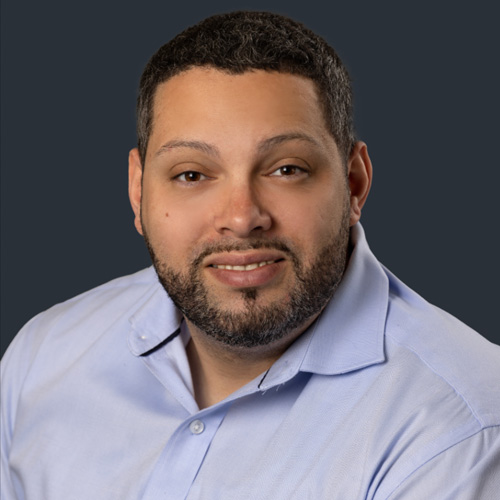
Medically reviewed by Codie Vassar, MD, MS
Board-Certified Adult Psychiatrist · Medical Director, Lotus Recovery Treatment Center
This page is reviewed by Codie Vassar, MD, MS, a board-certified adult psychiatrist who serves as Medical Director and reviews the clinic's addiction and mental health content for accuracy. His work spans outpatient psychiatry, psychiatric crisis care, and addiction medicine. He earned his medical degree and completed psychiatry residency at the Medical College of Wisconsin, holds a master's in Clinical Informatics from the University of Wisconsin-Madison, and is a member of the American Society of Addiction Medicine. He served 15 years in the Wisconsin Army National Guard Medical Corps. Day-to-day treatment is delivered by a licensed clinical team, and the program is licensed by the California Department of Health Care Services under license 560078AP and accredited by The Joint Commission. Connect with Dr. Vassar on LinkedIn.
What People Ask About IOP in Thousand Oaks
Will my insurance cover an IOP?
Usually. Most commercial plans cover intensive outpatient treatment, often with prior authorization, and we work with major insurers on both an in-network and out-of-network basis. Coverage varies by plan, so we verify your specific benefits for you before treatment begins and tell you what your plan covers.
How many hours per day is IOP?
Our IOP runs about three hours a day, five days a week, for roughly 15 hours total. That is more than standard weekly therapy and less than a full-day program, which is the balance that makes it intensive while still letting you keep a job or care for a family.
How long does IOP usually last?
Length is set by your clinical progress rather than a fixed schedule. Many people move through the IOP and then step down to lighter outpatient care for ongoing relapse prevention, and your team reviews how you are doing before any change.
What happens in an intensive outpatient program?
An IOP combines group therapy, one-on-one sessions with a licensed clinician, family involvement, and skills training built on methods like CBT and DBT. For addiction, it adds relapse-prevention planning and, when it fits, medication support. For mental health, it focuses on stabilizing symptoms and building coping skills you use between sessions.
What is the difference between an IOP and a PHP?
A partial hospitalization program fills most of the weekday and suits people stepping out of a crisis, detox, or residential care. An IOP is lighter, about three hours a day across five days, so you get real structure while living at home and keeping work or school. Most people step down from PHP to IOP as they stabilize.
Can I do an IOP online from home?
Yes. Along with in-person groups at our Thousand Oaks office, we run the same clinical hours by secure telehealth, so you can join from home or work. Many people mix in-person and online days across a week, and your team helps you decide which fits your schedule.
Does an IOP treat both addiction and mental health?
Yes. We run two tracks, one for addiction and one for mental health, and you can be treated for either or both at once. When a substance use problem and a mental health condition appear together, we treat them side by side as dual diagnosis rather than sending you to a second provider.
Where is your IOP located, and what are the hours?
We are at 290 Conejo Ridge Avenue, Thousand Oaks, CA 91361, off the 101 in the Conejo Valley, serving Thousand Oaks, Westlake Village, and the surrounding communities, with telehealth for people farther out. The office is open Monday through Friday, 9am to 9pm, and the admissions line is answered 24 hours a day.
Start an IOP Built Around Your Schedule
One call starts it. Tell us what is going on, we confirm your insurance, and we map the level of care that fits your life. We offer same-day appointments, welcome walk-ins, and answer admissions 24 hours a day.